Poing near Munich, May 28, 2026. In the fields of tire service and maintenance, in-depth technical knowledge and skilled craftsmanship are essential to ensure safety and quality. At the same time, new tire technologies, growing demands, and a focus on sustainability are changing the nature of the profession. Training to become a tire technician provides the essential foundation and is becoming increasingly important in light of these growing demands.
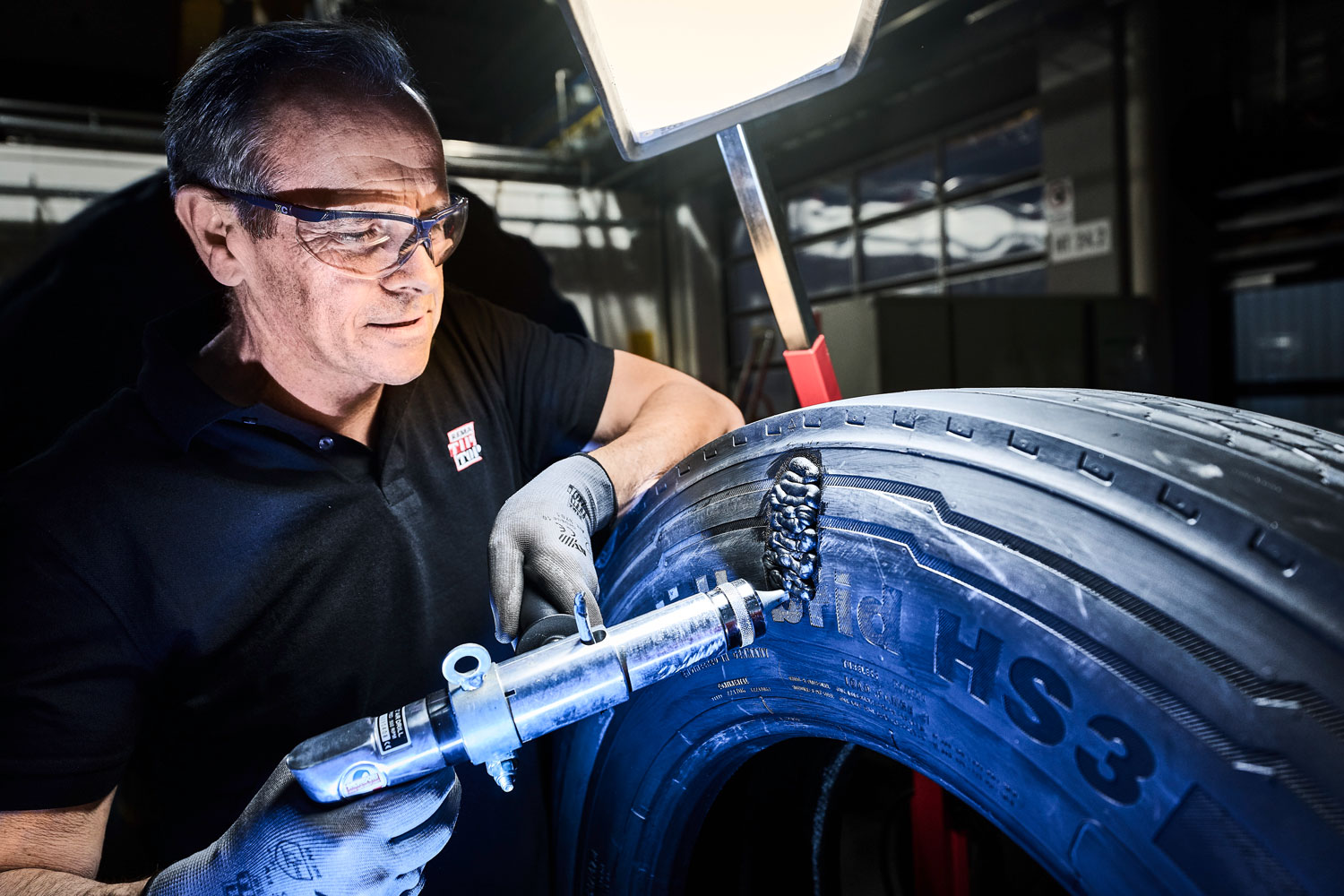
Gerhard Hieber explains the trends shaping the profession today and the role that training plays in this context. He has been with REMA TIP TOP for over 40 years and has been actively involved for many years in training tire repair technicians and in the professional development of skilled workers.
As a career changer at REMA TIP TOP, he discovered quite by chance the profession that continues to shape him to this day: “It wasn’t until I joined REMA TIP TOP that I learned the profession of tire repair technician even existed. It immediately captivated me and hasn’t let go since.”
His professional career has taken him from materials testing and developing repair materials to earning his Master Craftsman certification and assuming leadership roles within the REMA Motion division. He has also been actively involved in vocational training for many years, mentoring young professionals entering the workforce and contributing his expertise to training programs and trade association committees. This broad experience shapes his perspective on vocational training: “You never stop learning. Developments in the tire sector are constantly advancing, whether in ultra-high-performance (UHP) or run-flat technologies, in the truck and agricultural sectors, or in off-the-road (OTR) tires that must withstand extreme loads.”
Against this backdrop, Gerhard Hieber considers tire retreading training to be a crucial building block for the industry’s future, even though the pool of young talent remains limited. "Many people aren't familiar with this profession. Yet it offers excellent career prospects.” The topic is gaining even greater significance, particularly in light of sustainability. Through professional tire repair and retreading, resources are conserved, and tires are utilized to their full potential until the end of their service life.
Despite modern technologies, traditional craftsmanship remains indispensable. "Understanding materials and how they are processed is the foundation of every successful repair," Hieber emphasizes. Correctly assessing the nature of the damage is particularly crucial. "Without the necessary craftsmanship, failure is often inevitable." Therefore, in addition to practical skills, a thorough understanding of processes and the confident application of specifications and guidelines are essential requirements for this profession.
At the same time, the job profile has changed significantly over the past few decades. Modern tire sizes and technologies place new demands on skilled workers and equipment. “A passenger car tire today is no longer comparable to those of the past. We’re talking about UHP and run-flat tires in large sizes that can only be mounted using highly sophisticated machinery.” New materials and regulatory requirements have also replaced many older processes. Added to this is the growing influence of environmental and sustainability issues.
This development means that the profession as a whole is becoming more demanding. This trend is set to continue because: "As long as rubber is used as a material, there will be no standstill."
This makes ongoing professional development even more important, both within and beyond the company. Hieber regularly leads training sessions and shares his knowledge with new employees and experienced users alike. These sessions often focus on reviewing and reinforcing work procedures and building confidence in applying them. "Many people want confirmation that they’re doing everything right. That’s exactly where training comes in." After all, tire service involves working with safety-critical components. "Half-knowledge can have serious consequences here."
In addition to internal company programs, external initiatives also play an important role. Programs like those offered by the Stahlgruber Gesellschafter-Stiftung (translates as Stahlgruber Shareholders’ Foundation) significantly contribute to training skilled workers. "These programs are crucial for staying up to date and keeping pace with new technologies." They also help make the profession more visible and attractive.
Hieber views the progress among young people positively. "Interest has picked up again. Many realize that they are needed here as problem solvers." Nevertheless, he still sees a need for action, particularly when it comes to raising awareness of the profession. "We need to bring this topic into classrooms more often. Many people have no idea what opportunities are out there."
Hieber generally sees positive prospects for the future of tire repair training. New technologies, such as those related to e-mobility, will create additional demand, and the need for qualified professionals will remain high.
His personal motivation remains the same: sharing knowledge and supporting the next generation. "There's no point in keeping your experience to yourself. Everyone should benefit from it, whether today or in the future.”